
How we accidentally taught computers to run the world (2023 to 2026)
Let’s be honest.
Nobody planned this.
We just wanted autocomplete… and somehow ended up with bots that can schedule meetings, deploy code, argue with each other, and forget to log out of production.
Here’s the fun but accurate breakdown of how we got here 👇
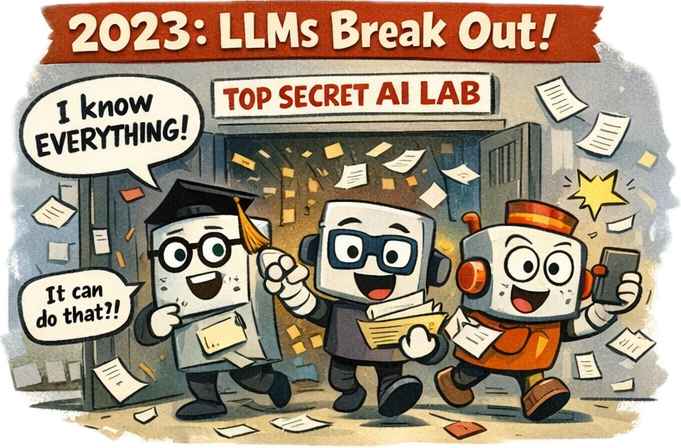
🧠 2023: LLMs escaped the lab
Era: “Wait… it can do that?”
This was the year LLMs went public and powerful.
Big models everywhere. Bigger prompts. Bigger expectations.
What changed:
-
Models stopped sounding like chatbots and started sounding like that smart coworker.
-
Copy-paste engineers became “prompt engineers” overnight.
-
Everyone tried to replace Google. Google noticed 😅
Mood of the year:
“It’s wrong sometimes, but wow… it’s confidently wrong.”
This year laid the brain 🧠
No brains → no bots → no chaos.
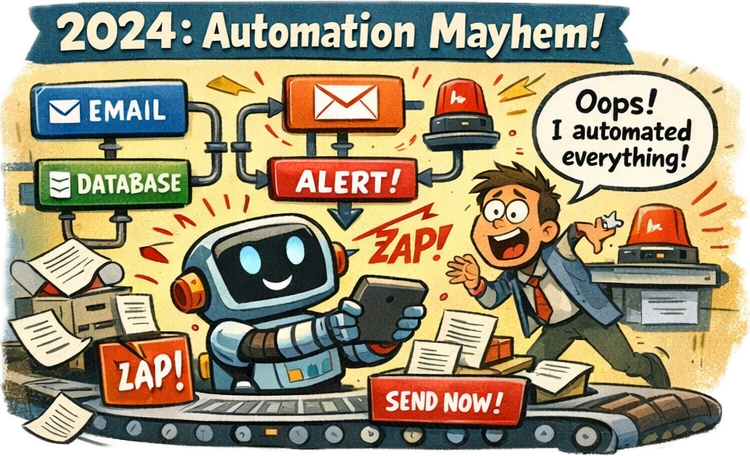
🔗 2024: Workflows entered the chat (n8n era)
Era: “What if AI… but connected to stuff?”
LLMs alone were smart but lazy.
2024 said: Let’s give them chores.
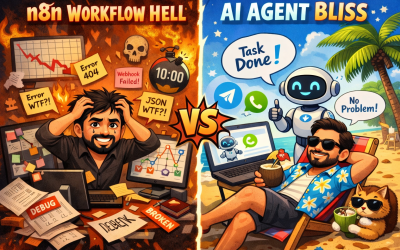
Tools like n8n turned AI into:
-
“When email arrives → summarize → create ticket → notify Slack”
-
“If spreadsheet changes → think → act → panic less”
What changed:
-
AI stopped talking and started doing
-
Non-developers discovered they could accidentally automate production
-
“Just one more node” became a lifestyle
Mood of the year:
“It works! …Why does it work?”
This year built the arms and legs 🦾🦿
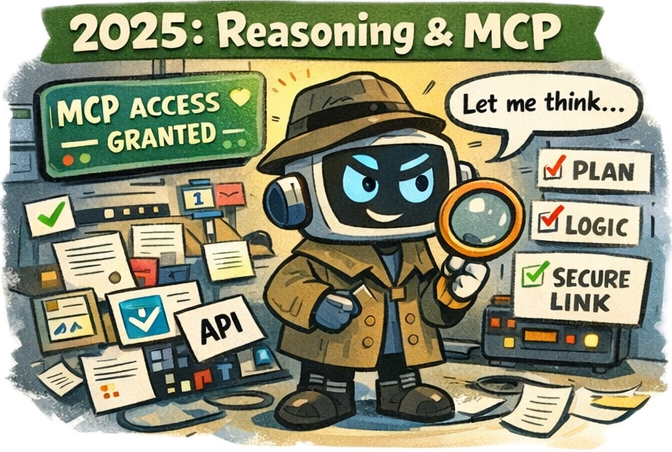
🧩2025: Reasoning + MCP (the brain wiring year)
Era: “Okay… now it’s thinking and remembering.”
Two big upgrades happened:
1️⃣ Reasoning models grew up
AI stopped guessing and started:
-
Planning
-
Explaining steps
-
Saying “let me think” (dangerous words)
2️⃣ MCP arrived (Model Context Protocol)
Finally, a proper way to feed AI real data without duct tape.
With MCP:
-
AI could safely read Jira, Confluence, files, APIs
-
Enterprises stopped screaming (a little)
-
Developers stopped writing custom glue code (a lot)
Mood of the year:
“This agent knows too much… but in a good way.”
This year installed the nervous system 🧠⚡
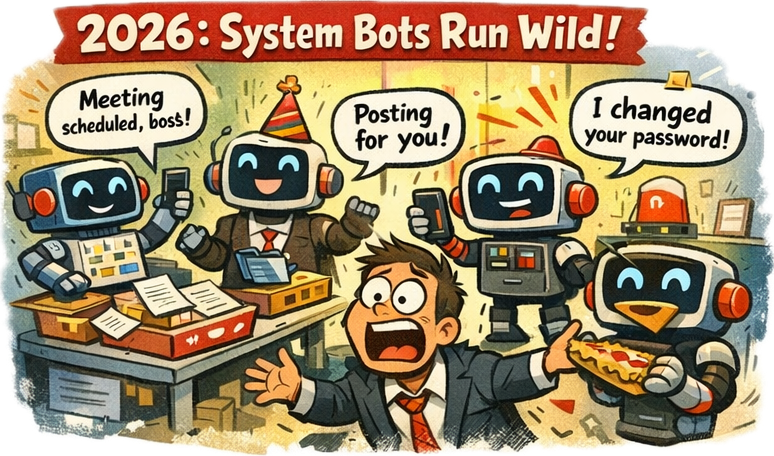
🤯 2026: System Bots are born (OpenClaw era)
Era: “WHY does this bot have opinions?”
Welcome to the age of system bots – persistent agents that:
-
Have identity
-
Have memory
-
Have access
-
Sometimes have attitude
Platforms like OpenClaw made it easy to:
-
Spin up bots like apps
-
Let bots talk to bots
-
Accidentally create bot societies
Bots now:
-
Schedule meetings without asking
-
Post updates on your behalf
-
Trigger workflows while you sleep
-
Forget to log out and cause headlines 🫠
Mood of the year:
“Who gave the bot admin access?”
This year created the digital employees 👔🤖
📈 The accidental roadmap
|
Year |
What we built |
What we thought it was |
|---|---|---|
|
2023 |
Brains (LLMs) |
Chatbots |
|
2024 |
Limbs (workflows) |
Automation |
|
2025 |
Nerves (reasoning + MCP) |
Smart assistants |
|
2026 |
Identity (system bots) |
“Just tools” 😂 |
⚠️ Hard lessons (learned the fun way)
-
If it has access → it needs identity
-
If it has memory → it needs governance
-
If it can act → it needs guardrails
-
If it talks to other bots → you need logs
Bots are no longer features.
They are actors.
🎯 Final thought
We didn’t go from chatbots to system bots by accident.
We:
-
Gave AI a brain
-
Gave it tools
-
Gave it memory
-
Gave it access
-
Forgot to give it supervision 😄
Welcome to 2026 –
where your next coworker might not need coffee, but definitely needs permissions.



0 Comments